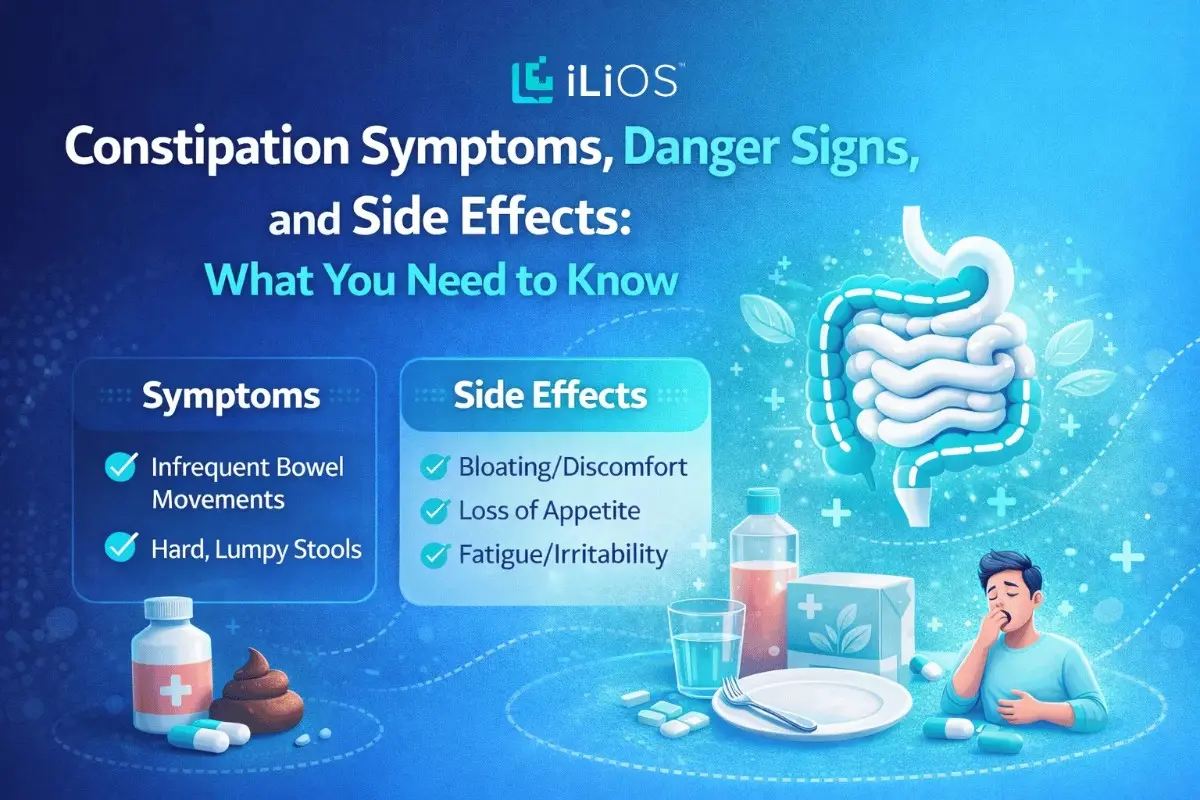
Constipation is a common intestinal problem that affects people of all ages. While, constipation that happens occasionally is not a big deal, but constipation that is severe and persistent can be an indication of a health problem. Knowing about the symptoms of constipation and its warning signs can help you get medical attention quickly and avoid problems.
This section reveals to you all you need to know, from how to determine whether or not you’re constipated to the symptoms of severe constipation, warning signs, and long-term adverse effects.

Serious About Your Health? We Are Too.
Partner with India's fastest-growing diagnostic network for precision testing.
How to know if you’re constipated?
Constipation is when you don’t have bowel movements very often, have trouble passing stools, or have stools that are dry, hard, and uncomfortable to pass. If you have less than three bowel movements a week, most likely you are considered constipated. However, the symptoms can be different for each person.
A Few Common Symptoms of Constipation
Symptoms of constipation may appear gradually or all at once. The most prevalent symptoms of being constipated are
- Not having regular bowel movements
- Stools that are hard, dry, or lumpy
- Having to push hard to have a bowel movement
- Feeling like the bowel is not emptying completely
- Bloating or pain in the stomach
- Experiencing gas and cramps
- Having less appetite
If you don’t address your constipation, these symptoms may get worse.
What does it feel like when you’re constipated?
A lot of individuals want to know, “What does constipation feel like?” The experience can be different, yet it usually includes:
- A feeling of heaviness or tightness in the lower abdominal region
- Feeling pressure in the rectum
- Discomfort or pain when passing stools
- A constant need to go to the bathroom to pass stools
- Feeling tired or sluggish in general
Constipation can also induce lower back pain or a feeling of fullness after eating small meals in some circumstances.
How to Determine if you’re Constipated?
You could be wondering how to identify if you’re constipated or if your symptoms are normal. You might be constipated if:
- You are passing stools less than three times a week.
- Your stools are always very difficult or hard to pass.
- You have to strain too much and use laxatives too often.
- If you experience pain or bloating that is related to bowel movement.
Keeping note of how often you go to the bathroom can help you see early changes and avoid symptoms from getting worse.
Signs of constipation that you should not ignore:
Mild to moderate signs of constipation
A few signs of constipation may not seem like a big deal at first, but they can get worse if you don’t treat them:
Bloating that doesn’t go away |
Pain in the stomach after eating |
Bowel habits that aren’t regular |
Feeling tired or uncomfortable all the time |
These symptoms often get better when you modify your lifestyle, such as eating more fiber, drinking more water, and getting more exercise.
Severe signs of constipation
Prompt medical attention may be required if you have the following signs:
Not having a bowel movement for more than a week |
Having extreme stomach discomfort |
Having constipation along with vomiting |
Not being able to pass gas |
Having fecal impaction, that is when hard stool gets stuck in the rectum. |
Severe constipation can make your everyday life difficult and could be a sign of a blockage or a major digestive problem and requires seeing a doctor.
Danger signs of constipation
Few red flags that you should never ignore
If you have any of these constipation warning signs, you should see a doctor right away:
Stools with blood |
Stools that are black or tarry |
Losing weight for no reason |
Constipation that doesn’t go away even with treatment |
Having constipation along with fever |
Constipation that shows up suddenly in older adults |
Chronic discomfort in the stomach |
Feeling fatigue and anemia |
Not paying attention to these signs can make it harder to figure out if you have bowel blockage, inflammatory bowel disease, or colon cancer.
Adults who are older or have poor health conditions may have slightly different warning signs of constipation. If you are an adult and have constipation with any of the following, you should visit a doctor:
- Chronic discomfort in the stomach
- A sudden alteration in how your bowels work
- Any history of colon cancer in the family
- If getting constipated for the first time after age 50
Adults who have had constipation for a long time may have neurological issues, metabolic abnormalities, or side effects from medications.
What are the side effects of constipation?
Constipation can lead to a number of unpleasant side effects if not managed, such as:
Short-term side effects | Long-term side effects |
Hemorrhoids caused by too much straining | Fecal blockage |
Tiny tears in the lining of the anus, known as anal fissures | Prolapse of the rectum |
Pain or bleeding in the rectum | Hemorrhoids getting worse |
A lot of gas and bloating | Blockage in the intestines |
Short-term problems usually get better after bowel habits go back to normal. Having long-term constipation can also have an effect on mental health, causing worry and anxiety about going to the bathroom and having a lowered quality of life.
Serious About Your Health? We Are Too.
Partner with India's fastest-growing diagnostic network for precision testing.
What are the Causes for Constipation?
Some of the most common causes are
- Not having enough fiber in the diet
- Not having enough water
- Lack of physical activity
- Ignoring the need to go to the bathroom
- Due to some drugs, such as painkillers, antidepressants, and iron supplements,
- Due to changes in hormones
- Due to any problems with digestion
Finding out what caused the problem helps you find the best remedy.
How to Avoid Getting Constipation naturally?
Here are some ways to live a healthier life and help your bowel to function better and prevent constipation from coming back:
- By consuming high fibre food such as fruits, vegetables, and whole grains
- Drinking plenty of water
- Exercising often
- Stick to a regular restroom routine.
- Do not take too many laxatives.
These small things you do every day might have a big effect.
When to Seek Medical Help For Constipation
If you have constipation that lasts longer than two weeks, you should see a doctor immediately.
- If home remedies do not work effectively
- If you notice severe signs of constipation.
- Your symptoms are really bad or getting worse.
Early evaluation always helps in preventing problems from happening and finding the root causes.
Conclusion
Constipation is one of the most frequently encountered digestive problems, and you should never ignore it, especially if the symptoms continue for more than a few days or develop again. If you know what constipation feels like, what the symptoms are, and the signs of severe constipation, you may act quickly and avoid further problems. Following simple things like eating extra fiber, drinking enough water, and being active will help with mild constipation. But if the symptoms don’t go away, you may need to see a doctor.
Adults need to be more conscious about the signs of constipation that could be dangerous, such as blood in the stool or extreme stomach pain. If you don’t pay attention to these warning symptoms, you could get major side effects from constipation, like hemorrhoids, fecal impaction, and intestinal obstruction. If you have constipation that is persistent or interferes with your daily life, consult a doctor for the right diagnosis and treatment. Taking care of your health early on helps protect your gut health and make you feel better overall.
Frequently Asked Questions
Q1. Is constipation an indicator of a serious illness?
Yes. If you have persistent constipation and other warning signals, it could be a sign of colorectal cancer, intestinal obstruction, or a neurological issue.
Q2. What are the side effects of constipation if not cured?
If constipation becomes chronic, it can cause hemorrhoids, anal fissures, fecal impaction, rectal prolapse, and intestinal obstruction.
Q3. Are the danger signs of constipation in adults different from mild symptoms?
Yes. Adults who are constipated should look out for blood in their stools, rapid changes in their bowel habits, unexplained weight loss, and constipation that doesn’t go away even after treatments.
Q4. What are the most prevalent signs of constipation?
The most typical signs of constipation are not having bowel motions very often, having firm stools, excessive straining, feeling bloated, and feeling like your bowels aren’t emptying completely.
Q5. How can constipation be treated?
If food and lifestyle modifications don’t help with constipation, you may need to consult a doctor. For a short time, doctors may suggest fiber supplements, stool softeners, or laxatives. You should only take long-term medicine with a doctor’s permission.