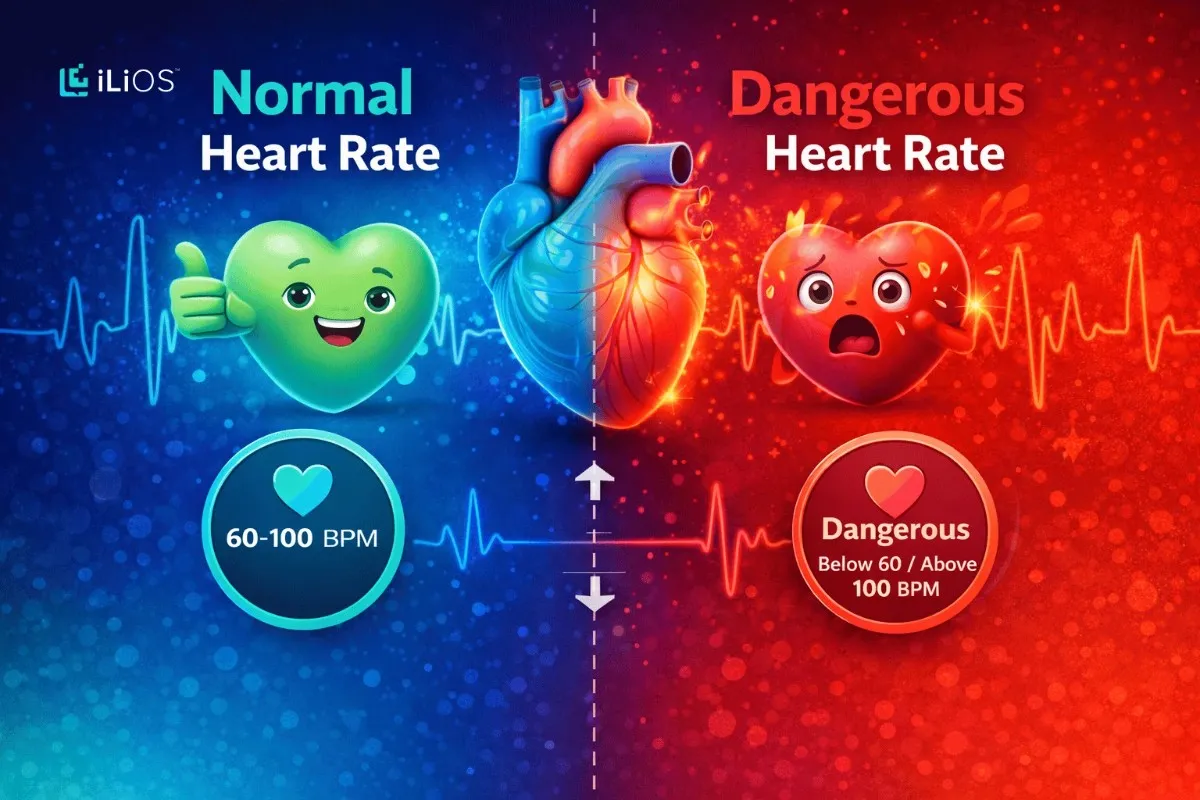
Your heart rate is a critical indicator that gives you immediate feedback about the efficiency of your heart. It depends on how much your heart is working to pump blood through your body. Your heart rate can fluctuate based on your age, activity level, fitness level, stress, and health. A normal or average heart rate is an indicator that your heart is meeting the body’s needs, whether you are resting or physically active.
But if your heart rate is persistently below or above the normal range, either too high or too low, it can be an indicator of a health problem. Although it is normal to have an abnormal heart rate temporarily due to physical activity, illness, or stress, it is dangerous if your heart rate is abnormal all the time. Finding the critical difference between a normal and dangerous heart rate will help you take immediate action to protect your heart health.

Serious About Your Health? We Are Too.
Partner with India's fastest-growing diagnostic network for precision testing.
What is a Normal or Average Heart Rate?
The average heart rate for a healthy adult when at rest is between 60 and 100 beats per minute. The heart rate is measured when you are relaxed, calm, and not physically active. Other factors that may influence the heart rate include age, hydration levels, stress, fitness level, medication, and weight. For example, an athlete’s heart rate is lower because their heart is efficient in pumping blood. The heart rate of an athlete is between 40 and 60 bpm.
Moreover, heart rate naturally changes across the day and increases during physical activity, stress, exercise, or illness. Children and infants tend to have a higher average heart rate than adults because of faster metabolism and growth needs. Though occasional fluctuations in heart rate are normal, a consistently high resting heart rate (above 100 bpm) or extremely low (below 60 bpm in non-athletes), combined with symptoms such as dizziness or fatigue, may warrant medical evaluation. Let us take a quick look at normal heart rates from newborns to adults.
Age | Average Heart Rate |
0 to 4 weeks (Newborn) | 100 to 205 bpm |
4 weeks to 1 year (Infant) | 100 to 180 bpm |
1 to 3 years (Toddler) | 98 to 140 bpm |
3 to 5 years (Pre-School Age) | 80 to 120 bpm |
5 to 12 years (School Age) | 75 to 112 bpm |
13 to 17 years (Adolescent) | 60 to 100 bpm |
18 years and above (Adult) | 60 to 100 bpm |
What is a Dangerous Heart Rate?
A dangerous heart rate is either too fast, too slow or irregular to prevent the heart from pumping blood efficiently. When adults have a normal heart rate above 100 bpm or below 6- bpm consistently, not because of sleep or fitness, then it can be alarming.
You must be concerned when a dangerous heart rate is accompanied by symptoms like dizziness, shortness of breath, chest pain, extreme fatigue or fainting. If you are wondering, what is high pulse rate? Sudden peaks above 150 bpm at rest, low rates below 40 bpm, or irregular heartbeats can be an indication of a serious heart problem and require urgent medical care.
Understanding Conditions with Dangerous Heart Rate
A) Tachycardia
Tachycardia is a severe heart condition when the resting heart rate is consistently above 100bpm for a considerable period of time. This can happen together with symptoms such as lightheadedness, weakness, and passing out. Let us understand what is high pulse rate, a few types of tachycardia conditions, to ensure you take the right action at the right time.
- Sinus Tachycardia: This is when the heart rate is higher than normal but with a regular rhythm. This is a normal body reaction to stress, exercise, dehydration, fever, or anxiety. In the majority of cases, it isn’t dangerous and settles once the underlying cause is treated. Moreover, persistent sinus Tachycardia may require medical assessment.
- Atrial Fibrillation (AFib): AFib is a common type of Tachycardia caused by the irregular electrical signals in the atria. It results in a fast, uneven heartbeat and may cause palpitations, shortness of breath, or fatigue. AFib can lead to stroke and heart failure if not totally controlled. In this case, the condition may require long-term management.
- Atrial Flutter: Atrial Flutter is similar to AFib but has a more organized electrical pattern. The heart beats rapidly here, often in a steady rhythm, which can reduce blood flow efficiency. Symptoms like dizziness, breathlessness and chest discomfort. It can further progress to atrial fibrillation if untreated.
- Supraventricular Tachycardia (SVT): SVT originates above the ventricles and causes sudden episodes of a very fast heart rate. These episodes may begin and stop abruptly and can be triggered by stress or excessive caffeine. While it is not life-threatening, frequent attacks can affect your quality of life. Medical therapy or processes may be required,
- Ventricular Tachycardia (VT): VT starts in the ventricles and is a serious form of Tachycardia. It can prevent the heart from pumping blood efficiently, resulting in fainting or cardiac arrest. VT occurs in people with underlying heart disease. However, immediate medical attention is essential for this heart condition.
Bradycardia
Bradycardia refers to a slower-than-normal heart rate. If you are wondering what is dangerous heart beat? A heart rate below 60 bpm in adults can be concerning. In some individuals, especially athletes or those who are physically fit, a slow heart rate can be harmless or normal. Though Bradycardia becomes dangerous when the heart cannot pump oxygen-rich blood to meet the body’s requirements. This can lead to symptoms such as dizziness, fatigue, chest discomfort, shortness of breath, or fainting.
Moreover, dangerous Bradycardia is caused by problems with the heart’s electrical system, ageing-based changes, electrolyte imbalance, heart disease or side effects of specific medications such as beta blockers. If left unchecked or untreated, severe Bradycardia can increase the risk of heart failure, frequent fainting or sudden cardiac arrest.
How to Count Heart Rate?

The process of checking your heart rate allows you to determine your current heart rate. You have two options to measure your heart rate, which include counting your heartbeats manually or using a heartbeat counting device. Let us learn 2 ways to check pulse rate easily:
- Take Your Pulse: Put your fingers on your wrist or neck. Furthermore, count the number of pulses in 60 seconds, or you can count for 30 seconds and then double the number to get accurate beats per minute (bpm).
- Use a heart-rate monitor: It typically fits around your chest and will enable you to see what your actual heart rate is. In addition, you can monitor your heart rate using technology you wear on your body, like fitness bands and watches.
Serious About Your Health? We Are Too.
Partner with India's fastest-growing diagnostic network for precision testing.
Conclusion
Knowing the difference between an average heart rate and a dangerous heart rate can help prevent serious heart issues in the future. Fluctuations in heart rate during daily activities (such as moving from a calm state to an emotional situation or engaging in physical activity) are normal. Increasing or low heart rates over a prolonged period should be cause for concern and warrant immediate medical attention.
If you experience warning signs such as chest pain, shortness of breath, or dizziness, they can be helpful clues that can help you make the right choices when faced with a medical emergency and avoid additional complications. Do not ignore any warning signs from your heart! Reach out to ilios Health for an extensive evaluation of your heart health and start taking the next step towards better heart health.
Frequently Asked Questions
1. What is a normal heart rate for women?
For adult women, resting heart rate ranges between 60 to 90 bpm, depending on your overall health and fitness level.
2. When should I see a doctor about my heart rate?
If you experience chest pain, irregular heartbeat or shortness of breath with abnormal heart rates, then look for medical assessment immediately.
3. When does a heart rate become dangerous?
A heart rate consistently ranging below 40 bpm or above 120 to 130 bpm as resting rate, then it can be dangerous medical attention.