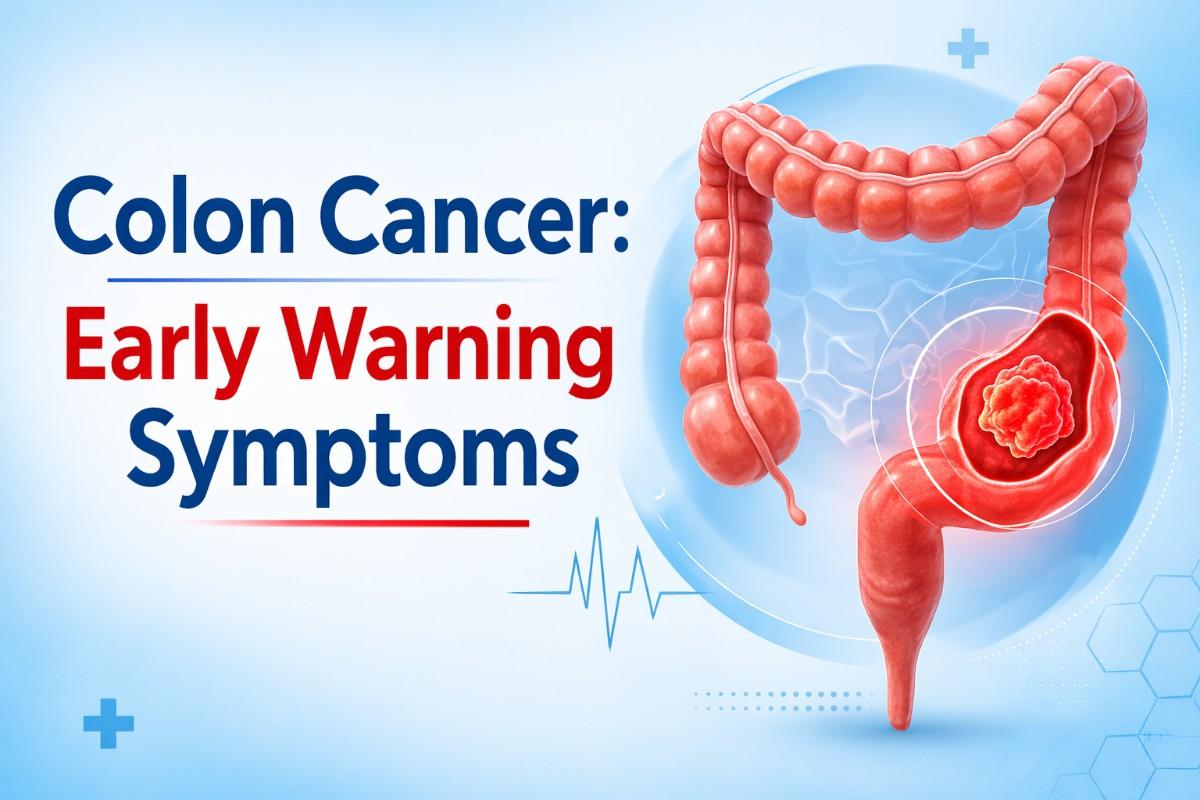
Colon cancer, also known as Colorectal cancer, is among the most prevalent forms of cancer worldwide and also one of the most preventable forms of cancer if caught early. Colon cancer originates in the colon or rectum, starting off as tiny, benign growths called polyps that develop into cancer over time. Because early-stage colorectal cancer may not produce noticeable symptoms, many people disregard subtle warning signs until the disease progresses. Raising awareness about these early indicators can improve survival rates and treatment results.
Early warning colon cancer symptoms must be identified for the purpose of early treatment and proper care. Changes in bowel habits, unintentional weight loss, presence of blood in stool, weakness, pain in the abdominal region or feeling of incomplete evacuation of the bowel must never be ignored. Even if they are indicative of less serious ailments, it is always better not to delay life-saving treatment. Early screening and medical consultation can make a huge difference in detecting colorectal cancer at a treatable stage.

Serious About Your Health? We Are Too.
Partner with India's fastest-growing diagnostic network for precision testing.
What is Colon Cancer?
Colon cancer is a form of cancer that begins in the large intestine, which is the last portion of the digestive tract. Cancer of the colon begins with microscopic, noncancerous tissue masses called polyps that form on the colon’s inner lining. Some of these polyps may eventually become cancerous. Colorectal cancer is often referred to together with rectal cancer as colorectal cancer since it occurs in the large intestine.
This form of cancer develops slowly and may lack signs of colon cancer in the early stages. As it progresses, individuals may experience changes in bowel habits (such as diarrhoea or constipation), blood in the stool, unexplained weight loss, persistent abdominal discomfort, or fatigue. Risk factors like age (especially over 50), family history of colorectal cancer, sedentary lifestyle, inflammatory bowel disease, smoking, obesity, diet high in processed, smoking or red meat.
Early detection is critical in the treatment and improved survival rates. Colon cancer screening tools, such as colonoscopy, are employed to identify and eliminate precancerous polyps before they become cancerous. If identified in the early stages, colon cancer is very treatable using surgery, radiation, chemotherapy, or second opinion on targeted therapy, depending on the stage and severity of the cancer.
Top 7 Colon Cancer Symptoms That You Shouldn’t Ignore
1. Persistent Changes in Bowel Habits
Signs colon cancer symptoms include changes in bowel habits that last for more than a few days. This may include diarrhoea, constipation, or alternating between the two without any reason, such as infection ora change in diet
If your stool suddenly becomes pencil-thin or you feel your bowel is not emptying properly, it may indicate a blockage or a tumour in your colon.
2. Blood in the Stool
Seeing blood in your stool isn’t normal! It may appear as bright red blood on toilet paper or darker, tar-like stools. While haemorrhoids can cause bleeding, it is essential not to assume that’s the cause without medical confirmation.
In most instances, rectal bleeding is one of the most frequent signs of colon cancer. Even if it is painless or intermittent, it is important to seek medical evaluation, including a colonoscopy, to rule out serious diseases.
3. Unexplained Abdominal Pain or Cramping
Abdominal discomfort or gas pains that are recurrent and do not go away can be the first warning symptom. Tumours can partially obstruct the intestine, leading to pain and gas
Unlike an intermittent case of digestive problems, this pain is constant or gradually worsening. If you have persistent lower abdominal pain and other symptoms of colon cancer, it is important to seek medical care.
4. Weakness and Fatigue
Feeling tired despite getting enough sleep may be due to hidden bleeding in the colon. Slow bleeding may cause iron-deficient anaemia.
Anaemia reduces the body’s oxygen levels, causing tiredness, breathlessness, or weakness. Many individuals tend to overlook this symptom, which can be attributed to the stress of lifestyle, but it can sometimes be the first sign of colon cancer.
5. Unexplained Weight Loss
Weight loss without any change in diet or exercise patterns can be quite alarming. When the body is fighting cancer, it releases chemicals that affect metabolism and appetite.
Furthermore, colon cancers can affect digestion and nutrient absorption. Unintended weight loss, when accompanied by other signs of colon cancer, should never be overlooked.
6. Feeling That the Bowel Doesn’t Empty Completely
A persistent feeling that you need to use the restroom, even after using the restroom, can be one of the early symptoms of colon cancer or rectal cancer.
Though this feeling may be accompanied by discomfort or pressure in the rectal area. Persistent incomplete evacuation is one of the subtle but important colon cancer symptoms that needs medical assessment.
7. Nausea or Vomiting
The advanced stages of colorectal cancer lead to intestinal blockage, which can occur as either total blockage or partial blockage. The patient experiences nausea, together with extreme abdominal distension and vomiting.
Nausea, which occurs frequently together with abdominal pain, constipation and swelling symptoms, indicates a medical emergency because it shows the presence of bowel obstruction.
What are the Causes of Colorectal Cancer?
Colorectal cancer occurs when genetic mutations turn healthy colon cells into cancerous cells. Cancer cells proliferate and multiply to form malignant colon polyps. Over time, cancer grows via layers of muscle and tissue that make up your colon wall. Eventually, cancer breaks through your colon wall and starts to spread outside your colon.
Moreover, medical researchers aren’t sure what triggers changes in colon polyps. Research typically shows specific factors tend to increase risk, such as:
- Genetic and Family History: If you have close relatives with colorectal cancer, your risk is high. Inherited conditions like Lynch syndrome and familial adenomatous polyposis (FAP) increases likelihood of developing colorectal cancer at ya ounger age.
- Age: This risk increases after age 50, although there have been increasing cases among younger adults in recent years.
- Colon Polyps: Certain types of polyps, especially adenomatous polyps (adenomas), can become cancerous over time if not removed.
- Unhealthy Diet: A diet high in red and processed meats and low in fibre, vegetables, and fruits is linked to colorectal cancer risk.
- Obesity and Physical Inactivity: Being overweight or leading a sedentary lifestyle increases inflammation and hormonal changes that contribute to cancer development.
- Smoking and Alcohol: Heavy smoking together with high alcohol consumption establishes two risk factors that lead to colorectal cancer development.
- Inflammatory Bowel Disease (IBD): The inflammatory diseases of Crohn’s disease and ulcerative colitis create risk factors that increase the likelihood of developing colorectal cancer.
Type 2 Diabetes: The risk of developing colorectal cancer increases for individuals with type 2 diabetes because their body weight remains constant.
Colorectal Cancer Test and Treatment
Early diagnosis of colorectal cancer increases the colon cancer survival rate. Physicians advise screening at age 45 or earlier if there is a family history or risk factors.
1. Stool-Based Tests
- Guaiac-based Faecal Occult Blood Test (gFOBT): It identifies blood leveraging a chemical reaction.
- Faecal Immunochemical Test (FIT): Detects hidden blood in the stool.
- Stool DNA Test: Looks for abnormal DNA changes associated with cancer.
2. Visual (Structural) Exams
- Flexible Sigmoidoscopy: It examines the lower part of the colon.
- Colonoscopy: The most comprehensive test allows doctors to examine the entire colon and remove polyps during the procedure.
- CT Colonography (Virtual Colonoscopy): Uses CT scanning to generate images of the colon.
If there is any abnormal growth, a biopsy is performed to check for cancerous cells.
In addition, the treatment also depends on the stage of your cancer, your health, and whether it has spread.
- Surgery: The primary treatment for early-stage colorectal cancer. Surgeons remove the tumour and nearby lymph nodes. In a few advanced cases, part of the colon or rectum may be removed.
- Chemotherapy: Leverages anti-cancer drugs to kill cancer cells or stop them from growing! It may be given before surgery (to shrink tumours) or after surgery (to reduce the risk of recurrence).
- Radiation Therapy: Radiology is commonly used for rectal cancer. It harnesses high-energy rays to eliminate cancer cells.
- Targeted Therapy & Immunotherapy: These are modern treatments that target cancer cell markers or help the body’s immune system attack cancer cells. This treatment applies to patients with advanced cancer.
Serious About Your Health? We Are Too.
Partner with India's fastest-growing diagnostic network for precision testing.
Final Takeaway!
Learning the early warning signs of colorectal cancer, such as changes in bowel habits, unintended weight loss, presence of blood in the stool, and abdominal pain, can literally be a lifesaver. Early detection of the disease leads to better treatment outcomes, so do not dismiss unusual changes in your digestive system. If you or your loved one is experiencing symptoms, contact the ilios Health team.
FAQs
1. What are the first indicators of colon cancer?
Early symptoms include changes in bowel habits and abdominal pain.
2. Do colon cancer symptoms in women differ from men?
Colon cancer symptoms in women are the same as in men, but could be confused with female problems (occasionally).
3. How I knew I had colon cancer?
Most patients usually complain of rectal bleeding, fatigue, or abdominal pain that did not go away with treatment.