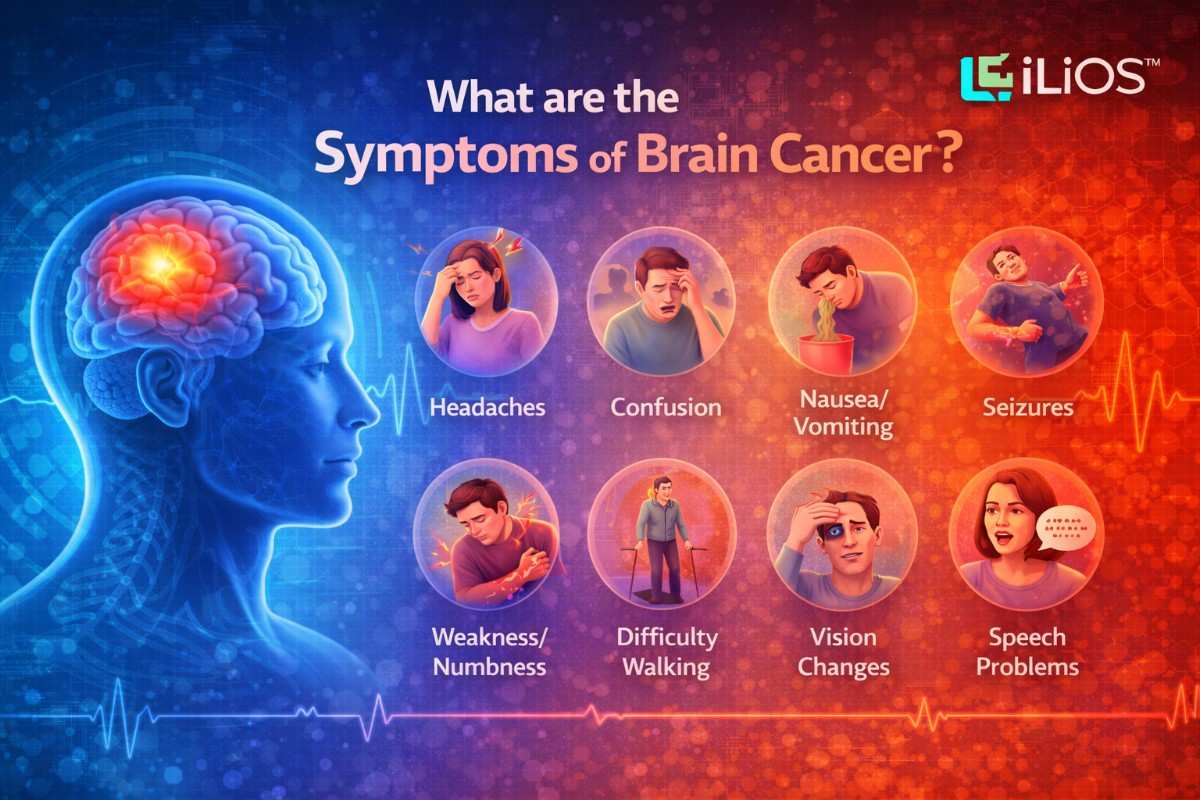
Brain tumors can develop in any part of the brain and show subtle brain cancer symptoms, which can be easily overlooked in early stages. Since the brain controls essential functions such as movement, speech and memory, even small tumors can cause some noticeable changes. Determining these early signs is important for the timely diagnosis and effective treatment.
Moreover, symptoms of brain cancer can differ depending on the tumour’s location, size and growth rate. While headaches, vision changes, balance issues are a few common signs, some symptoms may resemble other crucial health conditions. Identifying these warning signs early can assist individuals to look for medical attention quickly and enhance overall health outcomes.

Serious About Your Health? We Are Too.
Partner with India's fastest-growing diagnostic network for precision testing.
Brain Tumor: An Overview
A brain tumour is an abnormal growth of cells in or near the brain, involving nearby structures like nerves, pituitary and pineal glands and the brain’s protective membranes. Brain cancer symptoms may begin in the brain itself (primary tumours) or spread from cancers in other parts of the body (secondary or metastatic tumours). They can be benign (non-cancerous) or malignant (cancerous) and both types can ultimately affect brain function by pressing or invading the brain issue.
Moreover, brain tumours differ in size and behaviour! Some are detected early because they cause noticeable brain cancer early signs and symptoms. While others grow large before getting detected, especially if they develop in lesser active areas of the brain. Unlike other cancers, brain tumours aren’t staged but are graded from 1 to 4 by the World Health Organization (WHO). Grade 1 tumours grow gradually and are less aggressive, whereas grade 4 tumours grow quickly and are comparatively more aggressive and harder to treat.
Surgery is usually the first step to remove a tumour as possible, followed by the treatment such as radiation therapy or other targeted methods to manage brain cancer and symptoms or slow tumour growth.
Differences Between Brain Tumor & Brain Cancer
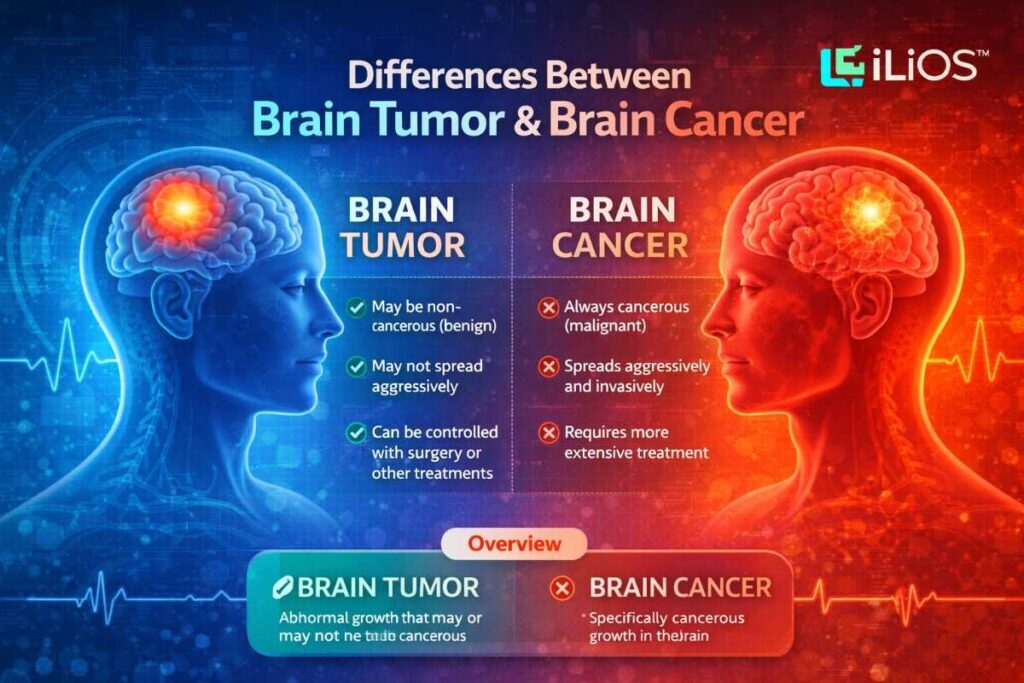
While the terms are often used interchangeably in casual conversation, there are significant medical and pathological distinctions between a general brain tumor and brain cancer. Understanding these differences is essential for determining prognosis and the aggressiveness of the brain tumour treatment required.
Factors | Brain Cancer | Brain Tumour |
Definition | Primary brain cancer (like glioblastoma) occurs from brain cells and metastatic brain cancer spread from other organs or other body parts can spread to the brain and grow. | Brain tumours are masses or abnormal growth of cells in the brain. It can develop in any area of the brain, like skull base, nasal cavity, protective lining, sinus and brainstem. |
Risk Aspects | Ionising radiation from previous treatment, growing age, genetic conditions, head injuries. Seizures due to organ transplants, HIV or chronic diseases are few risk factors. | Family history of cancer or tumour and genetic conditions like Li-Fraumeni syndrome, excessive radiation exposure increases risk of developing tumours. |
Causes | Uncontrolled cell growth in the brain includes fibroblasts, molecules, immune cells and blood vessels that trigger angiogenesis. It provides oxygen and nourishment to tumors, promoting their growth and eventually to cancer. | Genetic mutation, radiation exposure and Syndromes like neurofibromatosis, Li-Fraumeni are primary causes of tumours. |
Symptoms | Paralysis in body parts, aggressive behaviour, drowsiness and mood changes, loss of vision, vomiting, memory loss and seizures are early signs. | Headache, problem in walking, vision problems, memory issues and more are initial warning indicators. |
What are the Symptoms of Brain Cancer?
The early signs and symptoms of brain cancer primarily depend on the tumor’s size, its growth rate, and its specific location within the brain. In some cases, particularly with slow-growing benign tumors, an individual may not experience any symptoms until the tumor becomes quite large, making early diagnosis a clinical challenge.
However, when a tumor disrupts healthy brain tissue or increases intracranial pressure, several distinct warning signs typically emerge:
1. Persistent and Changing Headaches
Headaches are one of the most common symptoms of brain cancer, affecting nearly 50% of patients. These are not your typical tension headaches; they are caused by the tumor applying pressure to healthy brain tissue or causing swelling (edema).
Morning Intensity: Pain is often most severe upon waking and may improve slightly as the day progresses.
Physical Triggers: Brain cancer symptoms often include pain that worsens when you cough, sneeze, or bend over.
Location-Specific: Frontal lobe tumors may feel like sinus pressure, while tumors at the back of the head may cause referred neck pain.
2. Seizures and Convulsions
Seizures are frequent signs and symptoms of brain cancer or tumor. They occur when the tumor disrupts the brain’s electrical activity.
Motor Seizures: Sudden muscle jerks or full-body convulsions.
Sensory Seizures: Sudden changes in smell, taste, or vision (auras).
Tonic-Clonic Seizures: Loss of consciousness followed by muscle contractions and, occasionally, brief periods of restricted breathing.
3. Cognitive and Personality Shifts
Subtle changes in behavior are often the “silent” brain cancer early signs and symptoms. These can include:
Mood Changes: Increased irritability, apathy, or sudden depression.
Executive Dysfunction: Difficulty with complex tasks, planning, or following basic instructions.
Memory Loss: Significant lapses in short-term memory or confusion in simple matters.
4. Sensory and Motor Deficits
Vision Problems: Blurred vision, double vision (diplopia), or a loss of peripheral vision.
Balance Issues: Vertigo (the feeling that the world is spinning) or a loss of coordination (ataxia).
Speech Difficulties: Struggling to find words or sudden slurring.
Numbness: Feeling weak or restricted movement in a specific arm or leg.
5. Symptoms Specific to Demographics
Brain cancer symptoms in females and males are largely similar; however, if a tumor involves the pituitary gland, it may cause unique hormonal changes such as:
Unexplained weight gain.
Changes in appetite or extreme hunger.
Hormonal imbalances affecting reproductive health.
At-a-Glance Symptom Summary
| Symptom Category | Key Indicators |
| Pain | Persistent morning headaches, neck pain, or eye pressure. |
| Neurological | Seizures, convulsions, or auras. |
| Physical | Vomiting, nausea, fatigue, and dizziness. |
| Sensory | Hearing loss, vision changes, and balance issues. |
Other brain tumor symptoms
Both malignant and benign brain tumors can cause other symptoms such as:
- Vomiting or nausea
- Speech difficulties
- Balance issues/ loss of coordination
- Vision problems like blurry vision
- Restricted movement in the leg or arm
- Feeling fatigued
- Confusion in simple matters
- Behavior or personality changes
- Facing trouble obeying basic instructions
- Hearing problems
- Memory loss
- Gaining weight suddenly and feeling hungry all the time
- Feeling that the world is spinning, a condition termed vertigo
- Dizziness
If you experience the above-mentioned brain cancer symptoms in females and males, it will be wise to visit an experienced neurologist. The diagnostic will disclose whether there is a problem with your brain or spinal cord. While the symptoms may not indicate a brain tumour, why take chances?
Serious About Your Health? We Are Too.
Partner with India's fastest-growing diagnostic network for precision testing.
Treatment of Brain Tumors/ Cancers
Once you or a loved one notices symptoms of brain cancer, timely diagnosis is the critical first step. Modern medicine has moved toward a “multimodal” approach, meaning clinicians often combine several different strategies to achieve the best results.
Your specific brain tumour treatment plan will be personalized based on the tumour’s type (benign vs. malignant), its grade (WHO Grades 1–4), its molecular profile, and your overall health.
1. Advanced Surgical Resection
Surgery remains the primary treatment for most brain tumours. The goal is “maximal safe resection”—removing as much of the mass as possible while protecting vital brain functions like speech and movement.
Modern Techniques: Surgeons now use fluorescence-guided surgery (using a special dye to make cancer cells glow) and intraoperative MRI to ensure higher precision during the procedure.
Benefit: Reducing the tumour size immediately alleviates brain cancer and symptoms caused by intracranial pressure.
2. Precision Radiation Therapy
Radiation uses high-energy beams to destroy remaining cancer cells. In 2026, the focus is on “sparing the healthy brain”:
Proton Therapy: A highly targeted form of radiation that stops exactly at the tumour site, minimizing damage to surrounding healthy tissue.
Stereotactic Radiosurgery (SRS): A non-invasive “knifeless” surgery that delivers a single, high-dose beam of radiation to small or hard-to-reach tumours.
3. Chemotherapy & Targeted Drug Therapy
While the blood-brain barrier (BBB) historically made chemotherapy difficult, new drug delivery methods have improved effectiveness for brain cancer symptoms:
Temozolomide (TMZ): The standard oral chemotherapy often taken during and after radiation.
Targeted Therapies: Drugs like Vorasidenib are now used for specific genetic mutations (like IDH1/IDH2), allowing some patients to delay more aggressive treatments.
Medicated Wafers: Surgeons may place dissolvable chemotherapy wafers directly into the brain during surgery to kill lingering cells.
4. Breakthrough Emerging Therapies
As of 2026, several innovative treatments are moving from clinical trials into specialized care:
Tumor-Treating Fields (TTFields): A portable device worn like a cap that uses electrical pulses to disrupt cancer cell division.
Immunotherapy & Vaccines: Personalized vaccines (like DCVax-L) are being used to “train” the patient’s own immune system to recognize and attack the tumour.
LITT (Laser Interstitial Thermal Therapy): A minimally invasive laser “heat” treatment for tumours that are too deep for traditional surgery.
| Treatment Option | When It Is Used | Key Benefit |
| Surgery | Most accessible tumours | Rapidly relieves pressure and symptoms. |
| Radiation | Post-surgery or inoperable cases | Targets microscopic cells to prevent recurrence. |
| Chemotherapy | Malignant or aggressive tumours | Systemic control to slow tumour growth. |
| Immunotherapy | Recurrent or resistant cancers | Boosts the body’s natural defense system. |
The Bottom Line
Being diagnosed with a brain tumor is frightening, but survival rates are improving with advanced technology. Connect with the Ilios Health team to learn more about brain cancer symptoms and explore personalized treatment plans.
Frequently Asked Questions
Q1. What are the most common brain cancer early signs and symptoms?
The most frequent early indicators include new or worsening headaches (especially in the morning), unexplained seizures in adults, and sudden changes in vision or hearing. Many patients also report “cognitive fog,” such as difficulty finding words or unexpected personality shifts.
Q2. How do I know if my headache is a sign of brain cancer?
While most headaches are not cancerous, brain cancer symptoms often involve a headache that feels “different” than your usual ones. These headaches typically worsen with physical strain (like coughing or bending over), are most intense when you wake up, and do not respond to standard pain relievers.
Q3. Can brain cancer symptoms in females differ from males?
In general, neurological symptoms like seizures and motor issues are the same for both. However, if a tumor affects the pituitary gland, brain cancer symptoms in females may include hormonal imbalances, such as irregular menstrual cycles or unexplained milk production (galactorrhea), while males may experience erectile dysfunction.
Q4. Are all brain tumors considered brain cancer?
No. A brain tumor is a mass of abnormal cells; if these cells are slow-growing and do not spread, it is “benign.” If the cells are aggressive and invasive, it is “malignant” or brain cancer. However, both types require medical attention because even a benign tumor can press on vital brain structures.
Q5. What should I do if I notice symptoms of brain cancer?
If you or a loved one experiences persistent neurological changes, such as loss of balance, slurred speech, or a first-time seizure, you should consult an experienced neurologist immediately. Early diagnostic imaging, like an MRI or CT scan, is the most effective way to rule out or identify a tumor.
Q6. How is the treatment for brain cancer determined?
Treatment depends on the tumor’s type, grade (1–4), and exact location. Most medical experts recommend a combination of surgery to remove the mass, followed by radiation or chemotherapy to manage any remaining brain cancer and symptoms.