UTI SYMPTOMS IN FEMALES: A COMPLETE GUIDE ON SIGNS, SYMPTOMS, AND TREATMENT
Back to Blog
Food Facts

UTI SYMPTOMS IN FEMALES: A COMPLETE GUIDE ON SIGNS, SYMPTOMS, AND TREATMENT

Ilios Health
February 11, 2026
11 min read

Millions of women get urinary tract infections (UTIs) every year, making it one of the most frequent illnesses in women. It is very important to know the early signs and symptoms of UTI in females so that complications don’t happen, and treatment is started right away. 

Symptoms of a female UTI can be anything from slight pain to serious kidney infections and can be different based on their age, health, and the part of the urinary tract that is affected. Younger women generally have traditional signs of a UTI, such as painful urination and pelvic discomfort. However, older women may have few milder symptoms that are easy to miss, such as confusion, weariness, or changes in how often they urinate. 

This guide tells you everything that you need to know about the symptoms of UTIs in women, their most prevalent causes, treatment options, and how to avoid getting them. The information provided below would help you to recognize female UTI symptoms and take appropriate action for better urinary health.

Healthcare CTA

Serious About Your Health? We Are Too.

Partner with India's fastest-growing diagnostic network for precision testing.

✓ Advanced Testing Technology
✓ Verified Lab Technicians
✓ Transparent Pricing
✓ Reports in Your Language

What is a Urinary Tract Infection (UTI)?

A urinary tract infection happens when germs, such as bacteria (particularly E.coli), get into the urinary system, which includes the kidneys, ureters, bladder, and urethra. Women are more prone to UTIs compared to males because their urethra is shorter, which makes it very effortless for the bacteria to reach the bladder, and hormonal fluctuations also play a role.

Some common Signs and Symptoms of UTI in Females are:

  • Burning during urination: Pain or discomfort induced by inflammation of the urinary tract during urination is a classic symptom of UTI.
  • Needing to urinate often: having a strong urge to go to the bathroom frequently, even if the bladder isn’t completely full. 
  • Pain in the pelvic area or lower back: Discomfort or pressure in the lower abdomen or pelvis.
  • Fever and chills: In more severe cases, fever and chills may indicate a sign of infection and its spread to the kidneys.
  • Foul-smelling pee: Urine can look dark, cloudy, or may smell strange.
  • Blood in the urine: Hematuria may signify infection and is considered a serious symptom.

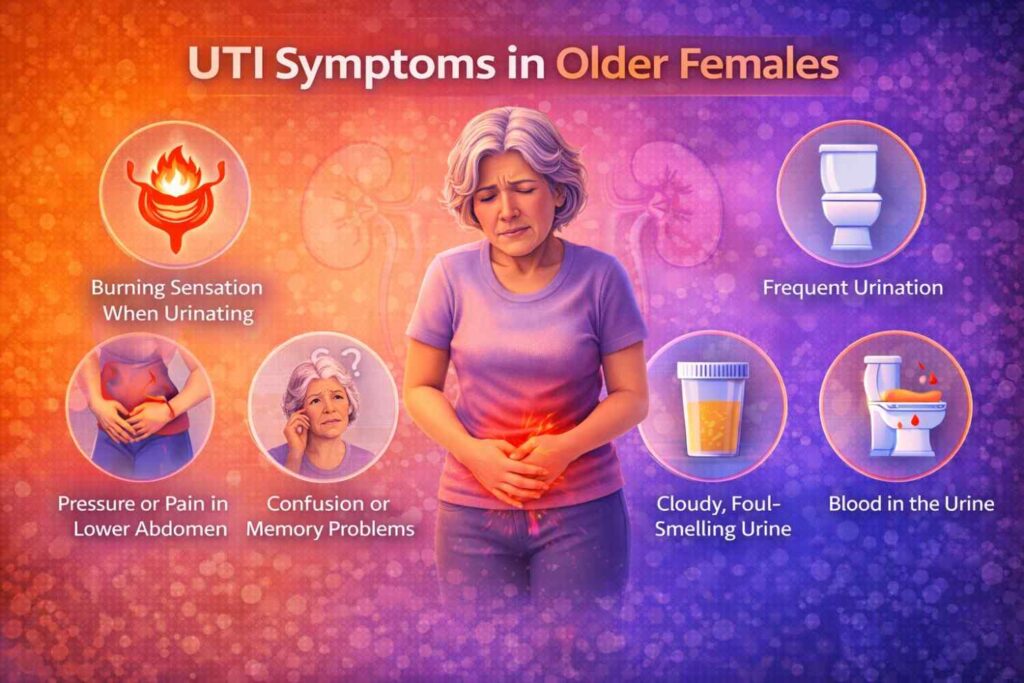
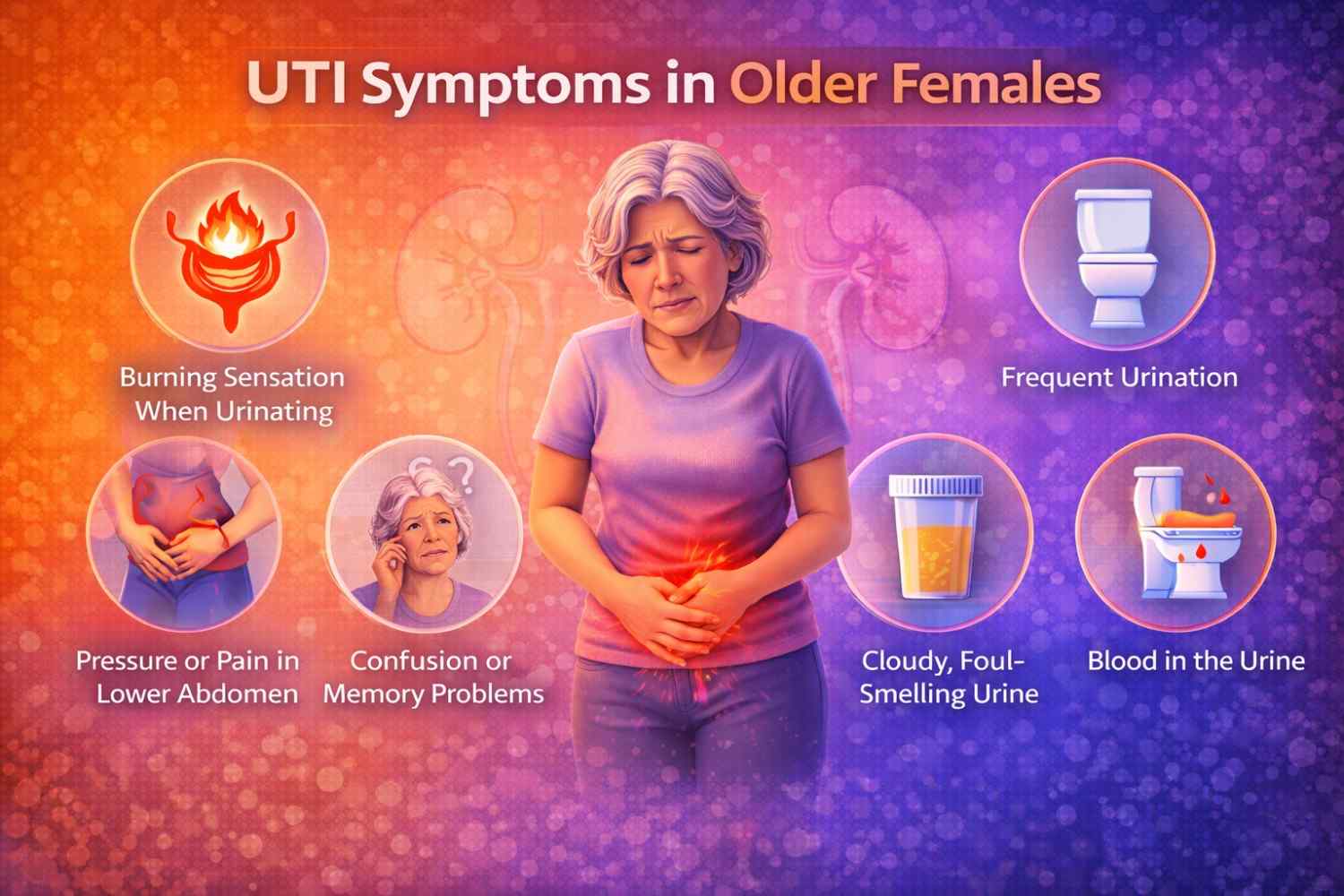
UTI Symptoms in Older Females 

UTISymptomsinOlderFemalesne

It’s important to be careful, because elderly women may not have visible urinary symptoms and may encounter modest signs of UTI, including:

  • Changes in mental states or confusion
  • Weakness or tiredness without common urinary signs
  • Loss of appetite
  • Urine Incontinence

Finding the signs and symptoms early is the best way to stop more serious problems from happening.

What Causes UTI in Females?

WhatCausesUTIinFemale
  • Poor Hygiene Habits

Maintaining improper hygiene after using the toilet can carry bacteria from the rectum to the urethra, which can cause an infection.

  • Factors related to intimacy

Having sex can introduce bacteria into the urinary tract. This is why some women may feel the effects of a UTI soon after having sex.

  • Ways for delaying conception

Using birth control devices like diaphragms and spermicidal gels can change the normal balance of bacteria in the vagina, which can make infections more prevalent.

  • When You’re Pregnant

As the uterus gets bigger and heavier, it puts additional pressure on the bladder, which might block urine from flowing. This, in turn creates an ideal environment for bacterial growth. 

  • Holding urine for a longer time

Bacteria can grow in the bladder if you hold in pee too often without going to the restroom, potentially leading to an infection.

  • Menopause

During menopause, hormonal changes and decreasing levels of estrogen can make the urinary tract lining thinner, which makes the body’s natural defenses weaker.

  • Chronic Health problems 

Chronic health conditions like diabetes can also raise the risk because they weaken the immune system or affect how the bladder works.

Healthcare CTA

Serious About Your Health? We Are Too.

Partner with India's fastest-growing diagnostic network for precision testing.

✓ Advanced Testing Technology
✓ Verified Lab Technicians
✓ Transparent Pricing
✓ Reports in Your Language

When should females having UTI symptoms consult a doctor?

If you see any of the following symptoms, its best advised to talk to a doctor:

  • When there is burning that doesn’t go away after you urinate
  • If you find blood in the urine
  • If suffering from fever, chills, or soreness in the back
  • If there are any infections that keep coming back

Recognizing the symptoms and early medical intervention prevents the symptoms of UTI infection in females from getting worse. If you don’t treat a UTI, it can lead to kidney infections, complications during pregnancy, recurrent UTIs, and in few severe instances can cause sepsis. Hence, it is very important to quickly recognize the symptoms of a UTI in women to stop it from happening.

How is UTI diagnosed in Females?

Most of the time, doctors rely on the following tests:

  • Urinalysis: Finds blood, bacteria, or white blood cells.
  • Culture of urine: Finds the type of bacteria and tells you which medications to take.
  • Imaging or cystoscopy: For UTIs that keep coming back or are hard to treat.

What are the treatment options for UTI in Women?

  • Antibiotics

UTIs are mostly treated with antibiotics. The type and length of time depend on the bacterial strain that is involved and the severity of infection.

  • Pain relief

Phenazopyridine and other over-the-counter drugs can help with burning and pain.

  • Things to do at home and changes in lifestyle

– Drink a lot of water to get rid of bacteria.

– Make sure to urinate after sex.

– Stay away from anything that can irritate your bladder, like caffeine, alcohol, and spicy food

– Keep your hygiene up to par.

– Use gentle cleansers. Soaps that are too strong or have a strong smell might make the area more irritated and make symptoms worse.

How to prevent UTIs in Females? 

  • Drinking plenty of water and going to the bathroom often. 
  • Wear breathable fabrics such as cotton underwear.
  • Don’t wear pants that are too tight, or leggings made of synthetic materials.
  • After going to the toilet, wipe from front to back.
  • Consider taking probiotics or cranberry supplements.
  • Don’t hold your pee for long periods of time.
  • After having sex, make sure to gently cleanse the area.
  • If you have diabetes, make sure that your blood sugar levels stay stable.

Following the methods mentioned above can greatly minimize the likelihood of female UTI symptoms coming again.

Conclusion

Women often suffer urinary tract infections (UTIs), but it’s crucial to know the early signs and symptoms so you can seek treatment right away and avoid further complications. Frequent urination, burning, lower abdomen pain, and dark/cloudy urine are all common signs of a UTI in women. It is also crucial to know that the symptoms in older women may display more mild signs of a UTI. Most UTIs can be treated and controlled well if they are diagnosed and treated quickly. Keeping good hygiene, identifying problems early, and receiving medical treatment can all help you avoid complications and get better faster.

Frequently Asked Questions


Q1: Is it possible for UTIs to get resolved without using antibiotics?

Taking antibiotics is one of the best and safest ways to avoid further problems or risks if taken under medical guidance, but mild UTIs may sometimes resolve on their own.

Q2: Does having sex make you more likely to develop a UTI?

Yes. Having sex can introduce bacteria into the urethra, which makes it more likely that you will have an infection.

Q3: Can eating the right foods help keep UTIs from happening?

Drinking a lot of water, having cranberry juice, or taking probiotics may help keep the problem from coming back.

Q4: Why do some women frequently keep getting UTIs?

Poor cleanliness, hormonal fluctuations, and diabetes may be to blame for frequent UTIs. Getting the right diagnosis can help keep you from getting infections again.

Q5: How often do pregnant women develop UTIs?

Pregnant women often get UTIs, and up to 8% of women who are pregnant may get a UTI. 

Q6: Does UTI during pregnancy have any effect on the fetus?

A UTI during pregnancy usually doesn’t harm the baby. But if bacteria enter the kidneys, UTI can turn into a more serious kidney infection. Sometimes, kidney infections can induce early labor or low birth weight.

Related Articles

Latest Health Insights

Stay informed with our latest articles on healthcare and medical insights

Stay Connected with iLiOS Health

Subscribe to our newsletter for the latest medical insights and healthcare updates

1